
Press Releases

TEMPE, Ariz., and PRAGUE, Dec. 9, 2025 /PRNewswire/ -- Gen (NASDAQ: GEN), a global leader dedicated to powering Digital Freedom through its family of Cyber Safety brands, today unveiled its 2026 Cybersecurity Predictions, forecasting a year defined by blurred realities, synthetic identities, emotional manipulation at scale, and a browser environment that becomes the primary battleground for everyday digital life.
According to Gen Threat Labs, 2026 marks the moment when the internet will evolve faster than human intuition can keep up. AI will not simply accelerate digital experiences – it will reshape trust, how we view identity, and truth itself. What was once fringe becomes normal. What was once obvious becomes ambiguous. And what once relied on human instinct will demand verification, skepticism, and new digital reflexes that most people have never been taught.
"Cybercriminals are no longer adapting to technology – they're directing it," said Siggi Stefnisson, Cyber Safety CTO at Gen. "From identity to emotion to the browser itself, every corner of the internet is becoming a contested space. Our goal is to prepare people for the reality ahead and empower them with the habits and tools that can keep them safe."
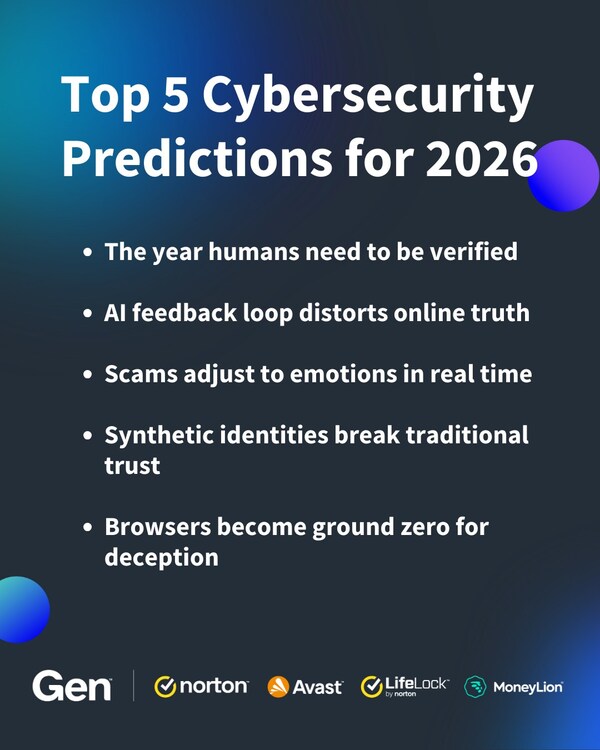
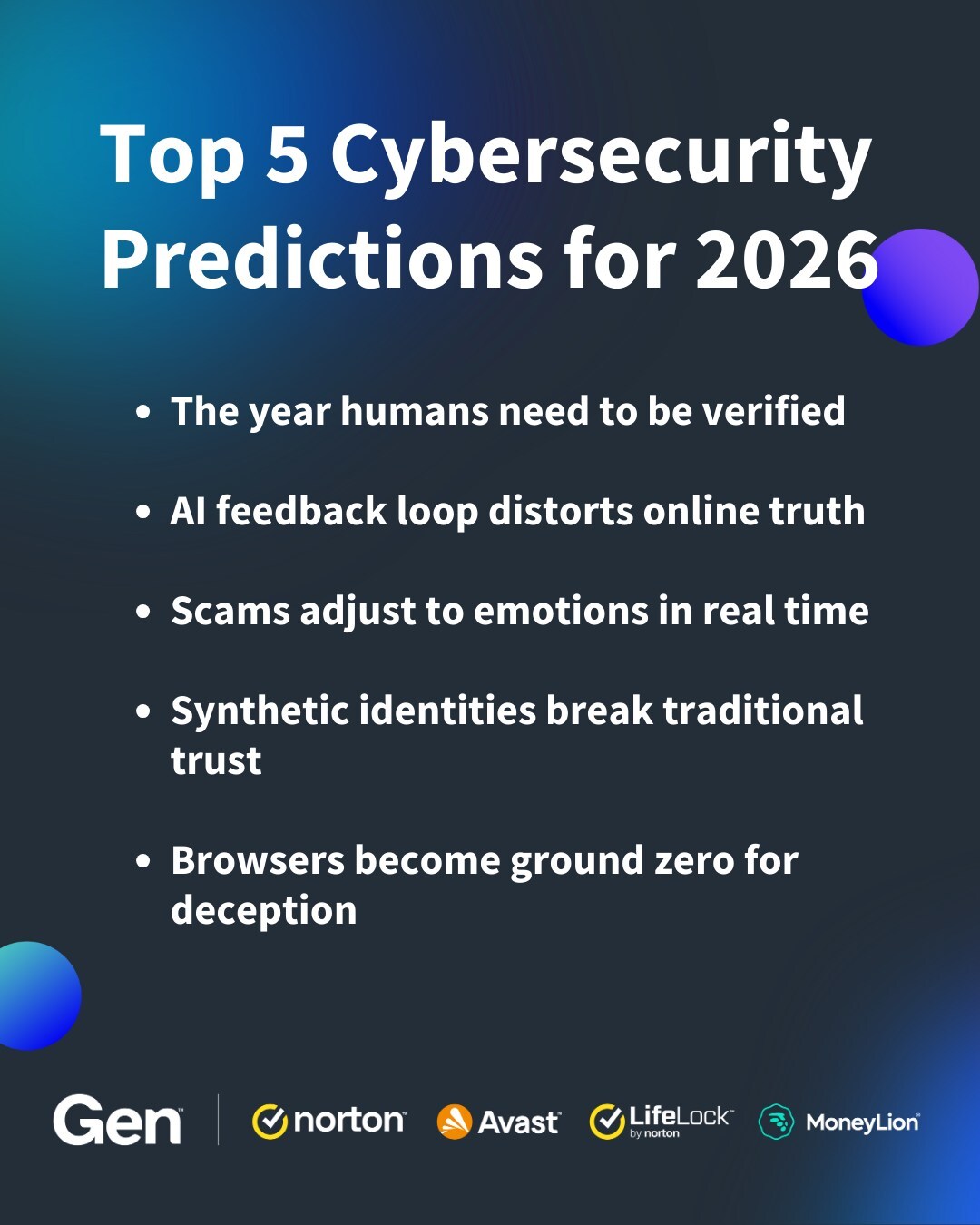
Gen's 2026 predictions outline five seismic shifts reshaping digital life:
- The Year Humans Need to Be Verified
Deception will leave the screen and enter daily life as AI makes it possible to clone a person's face, voice, and writing style in seconds. Synthetic personas – friends, colleagues, influencers, even romantic partners – will emerge with shocking realism.
Deepfakes will move from videos into real-time calls and live interactions, turning trust into a liability and making human verification the new safety reflex.
Consumer Tip: Pause, then verify. Use a second channel to confirm sensitive requests. Hang up and call known numbers. Set family safe words. If visuals or audio look slightly "off," stop before you act.
- The AI Feedback Loop Distorts Online Truth
In 2026, the internet will enter an AI-driven distortion cycle. Machine-generated content gets scraped, summarized, and republished by other AIs, degrading accuracy and creating a flood of synthetic noise.
To counter this, tech and media organizations will begin deploying authenticity markers and content-signing frameworks, though adoption will lag behind the surge of misinformation.
Consumer Tip: Apply a "two-source rule." Verify important claims through a credible, independent source. For finance, health, or safety topics, go directly to official websites rather than reshared posts or summaries.
- The Scam Industry Evolves into Emotional Engineering
Scams will transform from generic scripts into adaptive emotional engines. With real-time sentiment analysis, AI will sense fear, hesitation, guilt, or excitement – and tailor responses instantly.
This new era of "empathetic scams" will mirror human connection to manipulate more effectively than ever before, requiring people to notice emotional red flags, not just technical ones.
Consumer Tip: When a message sparks a strong emotion, name it. That breaks the illusion of intimacy scammers rely on. Then run the message through trusted scam detection tools like Norton AI Scam Assistant or Avast Scam Guardian.
- Synthetic Identities Trigger a Collapse in Digital Trust
AI will now generate entire identity kits – realistic IDs, bills, selfies, and even live video – that pass most basic verification checks. Criminals will use these fabricated personas to secure loans, open accounts, and commit cross-platform fraud at scale.
As "identity fusion" attacks expand across financial, tax, wallet, and service ecosystems, static credentials will no longer be enough.
Consumer Tip: Share ID documents only through verified websites or apps you navigate to directly. Enable transaction alerts or credit freezes and avoid sending credentials through unsolicited links.
- The Browser Becomes Ground Zero for Deception
The browser has become the most heavily targeted environment in 2025, and this trend will expand in 2026. AI-generated malvertising, fake storefronts, poisoned pop-ups, and session token theft will dominate online crime. Clicking what appears to be a bank or retailer link may lead to an AI-generated clone designed to steal payment details or login credentials.
Malware increasingly lives inside the page itself, not in downloads, making it harder for even cautious users to detect.
Consumer Tip: Use passkeys or two-factor authentication for important accounts and review your active sessions regularly. Shop through trusted retailers, look for real contact details, and avoid buying through ads or sponsored results. Select safe-by-design browsers, such as the new Norton Neo, built with AI-driven protection at its core.
To learn more about Gen's 2026 Predictions, read the 2026 Predictions Blog.
About Gen
Gen (NASDAQ: GEN) is a global company dedicated to powering Digital Freedom through its trusted consumer brands including Norton, Avast, LifeLock, MoneyLion and more. The Gen family of consumer brands is rooted in providing financial empowerment and cyber safety for the first digital generations. Today, Gen empowers people to live their digital lives safely, privately and confidently for generations to come. Gen brings award-winning products and services in cybersecurity, online privacy, identity protection and financial wellness to millions of people in more than 150 countries. Learn more at GenDigital.com.
About the Gen Threat Labs
Gen Threat Labs is the Cyber Safety research team within Gen, focused on uncovering and analyzing the latest digital threats and scams worldwide. Rooted in data, research, and technical expertise, the team identifies patterns and risks that shape the evolving cyber landscape. Their insights power the security technologies that protect people across Gen's portfolio of trusted brands, including Norton, Avast, LifeLock, and others.
|
Brittany Posey |
Courtney Rowles |
|
Gen |
Edelman for Gen |

SOURCE Gen Digital Inc.